Expected reading time: 10 minutes
The Bundled Licensing Myth
The story goes like this: software vendors are consolidating sprawling product catalogues into a handful of bundles. Fewer products mean fewer license metrics, fewer entitlement models, and fewer chances to miscount. Bundled licensing, the thinking goes, has already solved the software asset management (SAM) challenge. Sign the agreement, move on, and spend your attention elsewhere.
The Reality of Bundled Licensing
There is some truth in that. But the mistake is assuming simplification means less management effort. A simpler license model does not create a smaller job. It creates a different one. Treated the wrong way, bundled licensing creates financial risk and leaves real optimization opportunities on the table.
As entitlement rules get easier to interpret, organizations need more visibility elsewhere: into adoption, utilization and value. Many SAM and ITAM teams still run processes built for an earlier generation of licensing models, and those models have since moved on. That gap already shows: only 36% of organizations report full visibility into their IT assets today, and just 31% can see which AI capabilities, whether bought on their own or bundled into a platform they already use, are actually running across the business, according to Flexera’s 2026 State of ITAM Report.
How Software Packaging Is Changing
The reality is more complex. Over the past few years, vendors have changed how they package and sell software. Instead of maintaining large catalogues of individual products, many have moved to broader solution bundles.
Broadcom consolidated more than 160 VMware products into four subscription offerings. Broadcom now delivers VMware Cloud Foundation as a single SKU. It spans compute, storage, networking, automation and operations. SolarWinds folded its Orion modules into observability packages on a subscription model. Citrix retired many of its standalone and add-on licensing options. It replaced hundreds of individual SKUs with a smaller number of platform-based packages, and the Citrix Platform License now combines both Citrix and NetScaler capabilities. Nutanix has likewise streamlined its portfolio into a limited set of solution-focused SKUs. The Nutanix Cloud Platform combines infrastructure and cloud management capabilities under a single term license.
Not every vendor follows the same path. Salesforce has taken a different approach, expanding capabilities through editions, AI functionality and add-ons built on platform prerequisites. While infrastructure vendors typically simplify through consolidation, business application vendors often expand functionality through their platforms.
As a result, organizations often acquire capabilities they never individually selected, bundled into one agreement. This can cause teams to overlook functionality that is already sitting inside their CRM and ERP.
When Simpler Licensing Creates a Different Challenge
These shifts simplify licensing, but they also create a new challenge. Entitlement questions get easier to answer. In their place, organizations must confront a much larger one: what exactly have we purchased, and how much of it will we actually use?
A bundle is a set of capabilities an organization has purchased. The organization may never activate many of them, yet it pays for them regardless, from day one.
Audit activity itself has stayed steady. What has shifted is the target of that attention. Instead of counting entitlements, teams now manage consumption boundaries such as core minimums, user bands, node tiers and contractual commitments. These consumption boundaries are easier to monitor than the old entitlement rules. They are also easier to exceed quietly, through ordinary business growth rather than one bad decision.
Compliance still matters. But the real challenge now is making sure the organization gets value from everything it has already bought.
Why Organizations Still Get This Wrong
If the market has changed this much, why do so many organizations still manage software the old way? It generally comes down to three things.
First, measurement. Organizations can only manage what they can measure, and most tooling still focuses on installations, seats, logins and nodes. What’s much harder to measure is the value inside a bundle’s individual capabilities. Teams know they bought the bundle, but they rarely know which capabilities they actually use within it.
Second, incentive. Audit preparation, compliance reviews and license governance continue to consume a large share of SAM and ITAM teams’ time. Organizations still measure success mainly through audit outcomes, compliance positions and cost savings. Those remain valid goals, but they keep organizations focused on the questions bundled licensing has already simplified, at the expense of value realization.
Third, ownership. Procurement may buy the bundle, technical teams may manage it, and business units may benefit from it. Yet ownership of adoption is often unclear. As a result, valuable capabilities sit unused, not because they lack relevance, but because too many people share responsibility for their adoption.
The Hidden Cost of Not Knowing What You Own
The market has learned to measure unused licenses. Tooling counts logins, flags dormant accounts, and produces a reclamation list, and many organizations run that exercise regularly.
Bundled capabilities are harder to assess, and visibility is often far more limited. Organizations can clearly see whether someone uses a license. A capability, on the other hand, can sit at different stages of adoption: teams may license it, deploy it, partially adopt it, or never use it at all. Organizations can usually identify unused licenses. Unused capabilities tend to stay hidden instead, masking real unrealized value.
The cost typically shows up in three ways:
- Duplication. Organizations often buy separate tools for backup, monitoring, automation or analytics, even when similar functionality already exists inside a bundle they own. That creates overlapping investment, and it also adds integration, training, support and renewal effort.
- Negotiating position. Without capability-level usage data, renewal conversations tend to focus on price instead of value. Vendors typically have better visibility into product usage than customers do. Citrix, for example, retired file-based licensing in April 2026 in favour of a cloud-connected activation service, so entitlement now validates continuously against the vendor. That visibility gap makes it harder to have a balanced, informed renewal conversation.
- Value left on the table. This may be the most significant cost, and also the hardest to see. A capability that could automate a manual process, improve productivity or strengthen governance may sit inactivated for years. The organization has already paid for it.
What Mature Organizations Do Differently
Mature organizations approach bundled licensing differently. Through four practices, they focus on understanding, governing and extracting value from what they already own.
- They inventory capabilities, not just licenses. They track which capabilities inside their software bundles teams have deployed, configured or actively use, and which remain dormant. They assign ownership clearly, to keep accountability in place. This work can look administrative, but it’s the foundation for informed decisions, stronger renewals and better software investment.
- They put one question into the intake process. Before approving a new purchase, they ask: do we already have a capability that meets this need? That single question can prevent duplicate purchases and surface value in tools that the organization currently underuses.
From Visibility to Better Decisions
- They assess dependencies before activation. A common recommendation is to maximize use of the bundled capabilities an organization has already bought. That advice has merit, but it can also deepen reliance on a single vendor. Every newly adopted capability creates operational dependencies that can shape future technology decisions. Replacing a standalone tool with a bundled alternative, for example, may cut costs today while increasing reliance on that vendor over time. Mature organizations think through these implications, including migration effort and exit costs, before they commit. Deliberate dependency is a strategy.
- They negotiate on composition. Understanding which capabilities, the organization uses supports better commercial and renewal conversations. If the business only needs part of a bundle, restricted-use terms often remain negotiable in enterprise agreements. Where the full bundle is genuinely necessary, evidence of which capabilities are active and which are dormant creates a stronger basis for negotiation. Either way, a good negotiation runs on facts, not assumptions.
The most mature teams weigh cost optimization and business value together. Removing duplicate tools cuts cost. Activating dormant capabilities can improve productivity, user experience or business outcomes. Together, these two moves shift the conversation from software spend to business value.
Where to Start: Practical Governance Actions
These principles point toward a handful of concrete starting moves. The following actions are where most ITAM and SAM teams begin turning visibility into leverage.
- Create an inventory for your five largest vendor agreements, including ownership and usage status.
- Add a mandatory “Do we already own this?” check to software intake and procurement, using the inventory as the reference point.
- Assess potential exit or replacement costs before activating new capabilities.
- Set a data requirement for renewals: collect capability-level consumption data at least six months before renewal discussions begin.
- Measure ITAM success not only through compliance and audit outcomes, but also through the value realized from capabilities already owned.
- Conduct regular reviews with business stakeholders to understand which capabilities they use, adopt and derive value from.
The Leadout Perspective
Our position is straightforward. Bundling has not reduced the need for software asset management. If anything, it has increased the importance of understanding how organizations use their software investments and how those investments deliver value.
The role of ITAM is evolving. Traditional ITAM focused on maintaining accurate records and managing compliance. Today, leading organizations go further. They connect what the organization owns with what the business actually needs, giving them greater influence over investment decisions, renewal strategies and adoption outcomes.
Tools tell you what you own. Governance tells you what it’s worth. No amount of bundling changes that distinction, and no discovery platform can make the call on its own.
Capability governance used to live in the back office. It’s moving into the boardroom, because the same two questions now belong to both conversations: what did we buy, and what is it actually doing for the business?
This is where we work alongside clients. Our goal is simple: provide actionable insight and enable organizations to make informed decisions within existing renewal and budgeting timelines.
Key Takeaways
- Bundled licensing makes compliance easier to manage, but it makes understanding value more important than ever.
- Most organizations can identify unused licenses. Far fewer can identify unused capabilities hidden within their software bundles.
- One of the quickest optimization opportunities is eliminating duplicate tools that provide functionality already included in an existing bundle.
- Before adopting a bundled capability, consider both the immediate benefit and the long-term dependency it may create.
- Usage data is one of the strongest assets in a renewal negotiation. Start gathering it well before renewal discussions begin.
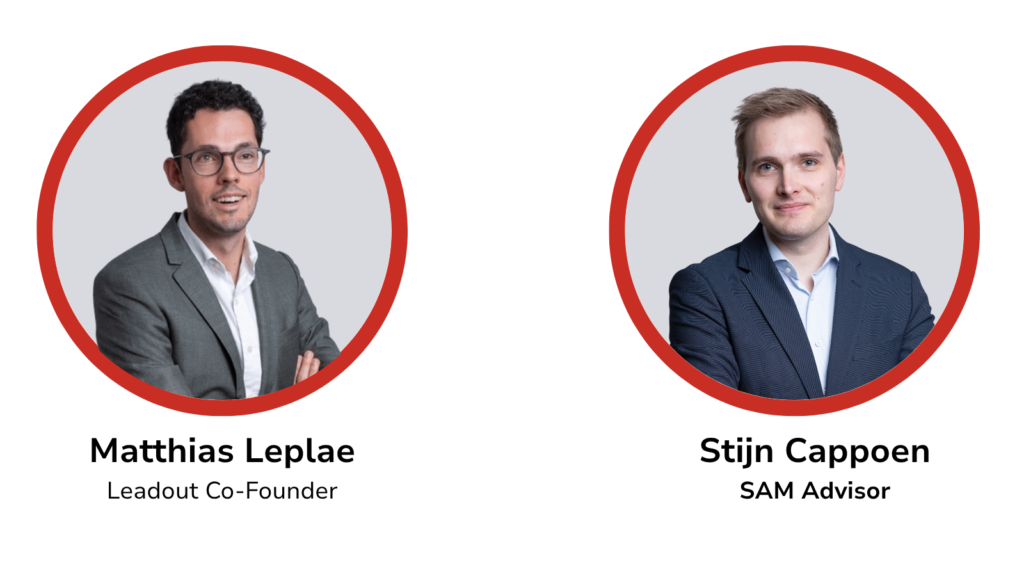
Matthias@leadoutsolutions.com Stijn@leadoutsolutions.com
Sources
Broadcom / VMware: portfolio consolidation into four subscription offerings; VMware Cloud Foundation as a single SKU. news.broadcom.com and vmware.com product documentation.
Nutanix: portfolio consolidated into solution-focused SKUs; Nutanix Cloud Platform bundles Nutanix Cloud Infrastructure and Nutanix Cloud Manager editions in tiered options on term licenses. nutanix.com/products/cloud-platform/software-options
Citrix / Cloud Software Group: add-on and standalone licenses retired, portfolio consolidated into Universal Hybrid Multi-Cloud and the Citrix Platform License (March 2024); file-based licensing retired 15 April 2026 in favour of the cloud-based License Activation Service. citrix.com/blogs and docs.citrix.com
SolarWinds: Orion modules consolidated into tiered SolarWinds Observability Self-Hosted subscription packages. solarwinds.com/hybrid-cloud-observability/pricing
Salesforce: Agent force platform prerequisites and edition-based AI packaging; enterprise agreement structures. Vendor documentation and Forrester negotiation guidance.
Flexera: 2026 State of ITAM Report, survey of 500+ IT asset management professionals on audit frequency, visibility gaps and inventory priorities. flexera.com/blog/it-asset-management/state-of-itam-2026-audits/
Share this message: